
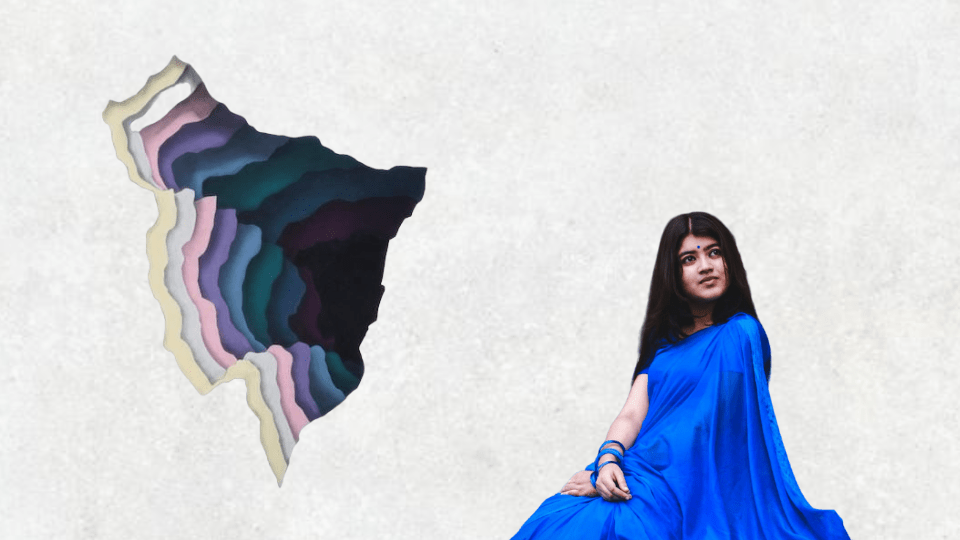
Although you have plenty of free time, being here in Mysore is a strong challenge: a great work on tapas (discipline) to hold you up, and also a big work on ahamkara, the part of the mind we know as ego; a task of dis-identification and letting go of preconceived ideas about oneself. To immerse ourselves in a different culture and observe where the practice we do comes from; to continue studying and deepening the different limbs. Being here is not only practising asana in the morning.
Just as the body opens slowly and it prepares at its own pace for a new posture, a glimpse into a different and ancient philosophy is for me something that I take very calmly -with deep respect-. I try to incorporate it into my own life, with my cultural background, which has gradually been permeated by other experiences. “Zones of creative cultural production” is the name given by anthropologist Renato Rosaldo to the intermingling of cultures: mixtures, creations, discards. Nothing pure or homogeneous.
You may like it: Diary of Mysore. First week
During these years, learning about yoga philosophical bases has allowed me some important things: to understand more the thinking system where the practice is inserted, and to enlighten some zones of my own practice, where sometimes my perception can reach, but not my intellect. If there is a field of experience, philosophy becomes meaningful; and also in the opposite way: some understanding of the philosophy had helped me to take practice in the right manner, creating a healthy, alive bond where I have neither expectations nor frustrations.
Esteban Krotz (1994) talks about the travel as a framework for the encounter between cultures: “It also always implies the possibility of getting used to what is at first completely unaccustomed and of accepting what was previously unknown; it may even be the case of finally being estranged from what had once been familiar”.
So here I am. Open to transformation. Writing about this travel because it has always been for me a way of inhabiting, a way of making the unfamiliar, familiar.

Sources
-Krotz, Esteban. (1994). Alterity and anthropological question. Alterities, vol. 4, no. 8, pp. 5-11. Autonomous Metropolitan University Iztapalapa Unit, Mexico City, Mexico
-Rosaldo, Renato. (1991). Borders crossing. Culture and Truth. Grijalbo, Mexico.






 A little fire
Leave a comment